

The Pakistan vs South Africa cricket rivalry is built on pace, pressure, and unpredictability. From fiery fast-bowling duels to tense run chases, every era has delivered drama. Neither side has ever controlled the rivalry for long, which keeps every series meaningful. It is a contest shaped by conditions, temperament, and moments of individual brilliance.
A Rivalry of Fire, Skill, and Shifting Power
Few international cricket rivalries combine raw pace, elite batting, and tactical depth like Pakistan vs South Africa. From neutral venues in the 1990s to packed stadiums in Lahore, Rawalpindi, and Centurion, this matchup has evolved across generations.
It is a rivalry shaped by great fast bowlers, elegant stroke-makers, dramatic tours, and frequent momentum swings. What follows is a complete, deeply detailed timeline covering every major phase, format, and turning point in the Pakistan national cricket team vs South Africa national cricket team rivalry.
Recent Pakistan vs South Africa Cricket Timeline: 2024–2025 Overview
The Pakistan and South Africa cricket rivalry has recently been defined by contrasting fortunes across formats. During Pakistan’s tour of South Africa in late 2024, South Africa dominated the Test series 2–0 but Pakistan bounced back in the ODIs, winning 2–1.
The following year, South Africa toured Pakistan, where the home team turned the tables, winning both the ODI and T20I series while drawing the Test series 1–1. These encounters highlight the teams’ adaptability, home advantage, and the dynamic nature of their rivalry across formats.
| Period | Host | Format | Result | Key Highlights |
|---|---|---|---|---|
| Dec 2024 – Jan 2025 | South Africa | Test | South Africa won 2–0 | Dominant wins in Centurion and Cape Town, strong pace attack |
| Dec 2024 | South Africa | ODI | Pakistan won 2–1 | Pakistan showed resilience in limited-overs matches |
| Dec 2024 | South Africa | T20I | South Africa won 2–0 | Quick starts and top-order dominance |
| Oct – Nov 2025 | Pakistan | Test | Drawn 1–1 | Pakistan won Lahore Test; South Africa leveled in Rawalpindi |
| Oct – Nov 2025 | Pakistan | T20I | Pakistan won 2–1 | Comeback in last two matches, strong batting performances |
| Oct – Nov 2025 | Pakistan | ODI | Pakistan won 2–1 | Series clinched in Faisalabad with disciplined bowling |
Origins of the Rivalry (1991–1994): A New Chapter Begins
South Africa’s return to international cricket in 1991 after apartheid marked the birth of this rivalry. Pakistan were already an established force, fresh off their 1992 World Cup triumph, while South Africa entered with hunger, discipline, and exceptional athleticism.
Early encounters were defined by contrast. Pakistan relied on flair, wristy batting, and reverse swing. South Africa leaned on structure, fitness, and relentless pace bowling. The difference in styles immediately made contests compelling.
These early matches were mostly limited-overs games, often played at neutral venues. South Africa quickly proved they could compete with top-tier teams, while Pakistan saw them as a serious long-term rival rather than a returning side finding its feet.
Key traits of the early 1990s phase:
- Pakistan’s batting depth vs South Africa’s bowling discipline
- Neutral venues leveling conditions
- Close finishes despite experience gap
- Foundation of mutual respect and competitiveness
1994–1995: South Africa Assert Early Control
The 1994–95 season marked South Africa’s first clear period of dominance over Pakistan. The teams met in multiple first-class matches, ODIs, and a Test, along with the Mandela Trophy tournament involving New Zealand and Sri Lanka.
South Africa’s consistency stood out. Their batters showed patience against Pakistan’s pace, while their bowlers refused to leak runs. Pakistan, meanwhile, struggled with adaptability, particularly against disciplined seam bowling.
The Mandela Trophy final series became a defining moment. South Africa defeated Pakistan 2–0, driven by strong top-order partnerships and superior fielding standards. It established South Africa as a formidable opponent rather than a transitional side.
1994–95 Series Snapshot
| Format | Matches | Result |
| ODIs | Multiple | South Africa dominant |
| Tests | 1 | South Africa win |
| Trophy Final | 2 | South Africa 2–0 |
Late 1990s: Pakistan Fight Back with Flair
By the late 1990s, Pakistan began reshaping the balance of the rivalry. After early South African control, Pakistan leaned into what had always defined their cricket: flair, unpredictability, and individual brilliance. This phase marked a revival driven by match-winners rather than systems.
Saeed Anwar’s elegance at the top, Inzamam-ul-Haq’s calm dominance in the middle order, and Wasim Akram’s mastery with the ball allowed Pakistan to seize moments that once slipped away. While South Africa remained the more consistent side across series, Pakistan were now capable of flipping matches in a single session.
Matches during this period often turned on sudden bursts. A rapid hundred, a devastating spell of reverse swing, or a collapse triggered by pressure became common themes. Test matches that seemed headed for draws frequently produced results due to short, explosive passages of play.
Key characteristics of the late 1990s phase:
- Pakistan relied heavily on individual brilliance.
- South Africa maintained structural consistency.
- Momentum shifts were abrupt and decisive.
- Emotional intensity between players increased.
Impact Players of the Late 1990s
| Player | Team | Influence |
| Saeed Anwar | Pakistan | Set aggressive tempos in ODIs |
| Inzamam-ul-Haq | Pakistan | Controlled chases and pressure innings |
| Wasim Akram | Pakistan | Match-turning spells with old ball |
| Allan Donald | South Africa | Sustained pace pressure |
| Hansie Cronje | South Africa | Tactical leadership |
Why This Phase Mattered
- Pakistan rediscovered belief against elite opposition.
- Matches became less predictable and more volatile.
- Individual performances began outweighing team plans.
- The rivalry shifted from structured to emotional battles.
Early 2000s (2002–2003): Conditions vs Class
The early 2000s emphasized how deeply conditions influenced the Pakistan vs South Africa rivalry. In South Africa, hard pitches and extra bounce heavily favored fast bowlers and technically compact batters. Pakistan, while dangerous, found these conditions challenging.
South Africa’s batting unit matured significantly during this period. Their ability to bat long hours in Tests reduced Pakistan’s opportunities to attack. Pakistan, in response, leaned almost entirely on their bowlers, especially reverse swing and spin when surfaces allowed.
In Asia and neutral venues, the equation reversed. Pakistan’s bowlers found sharper movement, and South Africa’s batters were forced to adjust. This contrast highlighted a recurring theme that would persist for decades.
Defining patterns of this era:
- South Africa dominated home Tests.
- Pakistan remained stronger in subcontinental conditions.
- Bowling played a greater role than batting.
- Series outcomes often mirrored venue conditions.
Venue-Based Performance Trend (2002–2003)
| Location | Advantage | Reason |
| South Africa | South Africa | Bounce, pace-friendly surfaces |
| Pakistan/Neutral | Pakistan | Reverse swing, spin support |
| Neutral ICC events | Balanced | Adaptability mattered most |
2006–2007: High-Octane ODIs Take Center Stage
By the mid-2000s, the rivalry entered a faster, more aggressive phase. ODI cricket evolved rapidly, and Pakistan vs South Africa matches reflected that shift. Scores climbed, run rates accelerated, and conservative batting became obsolete.
Both teams began prioritizing all-rounders, allowing deeper batting lineups and greater tactical flexibility. Captains used part-time bowlers creatively, exploiting matchups rather than rigid roles.
This period produced numerous last-over finishes. Matches were frequently decided by a single over, a missed chance, or a calculated risk. Fans began viewing Pakistan vs South Africa as guaranteed entertainment in limited-overs cricket.
What defined this ODI era:
- Batters attacked earlier in the innings.
- Middle orders became match-defining.
- Fielding standards improved significantly.
- Death-over execution gained importance.
Key ODI Trends (2006–2007)
| Aspect | Change Observed |
| Average Scores | Increased sharply |
| Strike Rates | Faster across top six |
| All-Rounders | Greater tactical use |
| Finishes | More last-over results |
Defining Elements of This Phase
- Faster scoring rates redefined ODI tempo.
- Stronger middle orders stabilized chases.
- Tactical use of part-time bowlers disrupted rhythm.
- Frequent last-over finishes heightened tension.
How These Eras Shaped the Rivalry
Together, these three phases transformed the Pakistan national cricket team vs South Africa national cricket team rivalry from a condition-based contest into a multi-dimensional battle.
- The late 1990s injected emotion and unpredictability.
- The early 2000s reinforced the importance of adaptability.
- The mid-2000s made entertainment and tempo central to outcomes.
These shifts ensured the rivalry stayed relevant, intense, and endlessly watchable as it moved into the modern era.
2010–2011: South Africa’s Golden Generation
The early 2010s marked the peak of South Africa’s dominance across formats. Their squad blended raw pace, technical excellence, and elite fielding into a unit that rarely made mistakes. At home, they were especially ruthless, turning favorable conditions into near-guaranteed results.
South Africa’s fast-bowling group consistently extracted bounce and carry, forcing errors even from well-set batters. Their batting lineup was built around patience and shot selection, allowing them to bat long in Tests and control chases in ODIs. Pakistan, despite moments of brilliance, struggled to maintain consistency across multi-match series.
This era cemented South Africa’s reputation as a benchmark team. Pakistan often competed strongly in individual sessions or matches, but South Africa’s structure and depth usually prevailed over time.
Why South Africa dominated in this phase:
- Relentless pace pressure on fast tracks
- Technically compact top-order batters
- Exceptional fielding standards
- Clear roles across all formats
Key Contributors (2010–2011)
| Team | Player | Role |
| South Africa | Dale Steyn | Strike fast bowler |
| South Africa | Jacques Kallis | Batting anchor and all-rounder |
| South Africa | AB de Villiers | Match-finishing batter |
| Pakistan | Mohammad Amir | Early breakthrough specialist |
| Pakistan | Misbah-ul-Haq | Stabilizing presence |
2013–2014: Batting Stars Take Over
By the mid-2010s, the rivalry shifted toward batting dominance. Matches increasingly revolved around top-order stability and acceleration rather than sudden collapses. Aiden Markram and Babar Azam emerged as reliable anchors, capable of batting through innings under pressure.
Quinton de Kock added a new dimension with aggressive starts, regularly forcing Pakistan onto the defensive early in ODIs. Pakistan’s bowlers still posed threats, particularly in short bursts, but defending totals became more difficult as pitches flattened and bats improved.
This phase emphasized execution over surprise. Both teams relied on planning, timing, and shot selection rather than improvisation or chaos.
Defining traits of this era:
- Stronger opening partnerships
- Higher average ODI scores
- Reduced effectiveness of surprise bowling spells
- Greater emphasis on batting depth
Batting Influence Comparison (2013–2014)
| Player | Team | Impact |
| Babar Azam | Pakistan | Controlled run chases |
| Aiden Markram | South Africa | Anchored top order |
| Quinton de Kock | South Africa | Fast powerplay scoring |
| Mohammad Hafeez | Pakistan | Stability at the top |
2015–2016: Tactical Depth and Adaptation
The 2015–2016 seasons showcased a more cerebral rivalry. Both teams invested heavily in preparation, opposition analysis, and situational awareness. Captains made decisions based on matchups rather than reputation.
South Africa frequently targeted Pakistan’s middle overs with short, attacking spells, while Pakistan aimed to disrupt South Africa early by hunting wickets with the new ball. Results varied, but matches were usually decided by small tactical calls rather than dominant performances.
This phase reflected a mature rivalry where neither side relied solely on raw talent. Planning, execution, and adaptability became decisive.
Tactical themes of this period:
- Matchups over fixed roles
- Data-driven bowling changes
- Flexible batting orders
- Field placements tailored to individuals
Tactical Comparison (2015–2016)
| Aspect | Pakistan | South Africa |
| Bowling Focus | Early breakthroughs | Middle-over control |
| Batting Approach | Rebuild then accelerate | Maintain tempo |
| Match Control | Momentum-based | Structure-based |
2017–2019: Transitional Years
Both teams entered a rebuilding phase between 2017 and 2019. South Africa began phasing out experienced campaigners, while Pakistan experimented with lineups across formats in search of balance.
This transitional period produced unpredictable results. Pakistan often surprised South Africa in limited-overs matches, especially in neutral conditions, while Test matches remained tightly contested and strategically intense.
Although neither side was fully settled, this phase played a crucial role in developing the next generation of players who would define the rivalry going forward.
Key features of the transition period:
- Frequent squad changes
- Emergence of younger players
- Inconsistent but competitive results
- Increased reliance on bench strength
Transitional Phase Snapshot (2017–2019)
| Format | Trend |
| Tests | Closely fought |
| ODIs | Unpredictable |
| T20Is | Youth-driven performances |
2023–2024: Pakistan’s ODI Surge
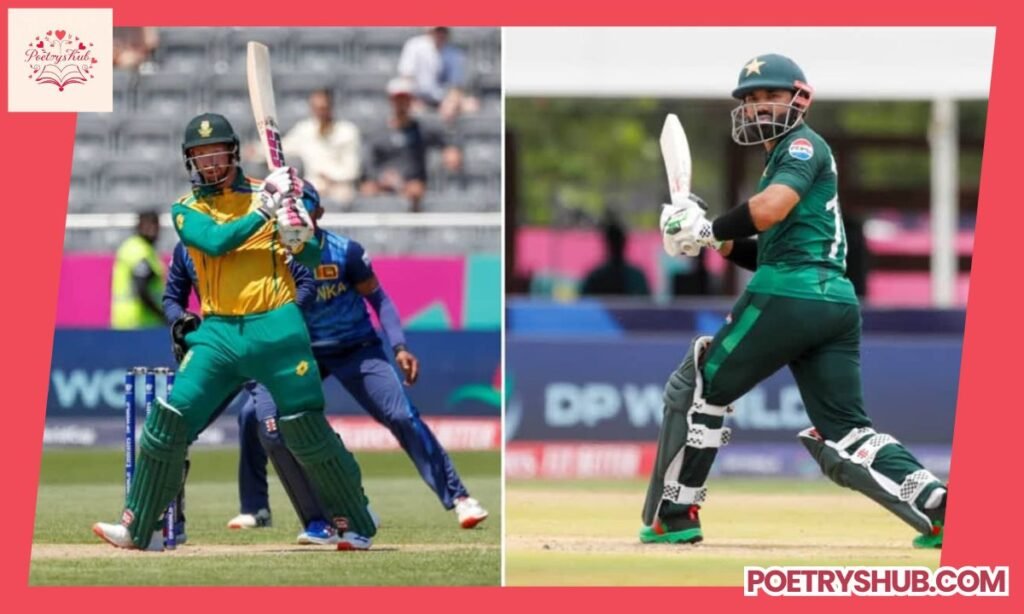
Pakistan’s resurgence in ODIs against South Africa became evident during tours in 2023 and 2024. Winning repeatedly on South African soil marked a significant shift in the rivalry, highlighting Pakistan’s improved temperament and chasing ability.
Young batters like Saim Ayub and Salman Ali Agha delivered under pressure, while Pakistan’s bowling executed disciplined plans, particularly in the middle overs. South Africa remained competitive, but Pakistan’s composure in crunch moments made the difference.
This surge signaled Pakistan’s evolution into a more complete ODI unit, capable of winning away from home.
Why Pakistan succeeded in this phase:
- Calm run chases under pressure
- Strong middle-order contributions
- Disciplined bowling plans
- Improved fielding execution
Recent ODI Results Snapshot
| Date | Venue | Winner | Key Highlight |
| Dec 17, 2024 | Paarl | Pakistan | Saim Ayub 109 |
| Dec 19, 2024 | Cape Town | Pakistan | 81-run win |
| Dec 22, 2024 | Johannesburg | Pakistan | DLS-method victory |
How These Phases Reshaped the Rivalry
Together, these periods transformed the Pakistan national cricket team vs South Africa national cricket team rivalry into a contest defined by evolution rather than dominance.
- South Africa’s golden generation set the benchmark.
- Batting stars raised the technical level.
- Tactical depth narrowed margins.
- Pakistan’s ODI surge restored balance.
Each phase added a new layer, ensuring the rivalry remained relevant, competitive, and compelling across formats.
South Africa Tour of Pakistan 2025–26: A Modern Classic
The 2025–26 South Africa tour of Pakistan felt like a full-circle moment for the rivalry. With Test cricket firmly re-established in Pakistan, packed stadiums in Lahore and Rawalpindi created an atmosphere that elevated every session. The tour balanced tradition with modern intensity and showcased how evenly matched these two sides have become.
Across Tests, ODIs, and T20Is, no team dominated outright. Instead, small moments, tactical clarity, and individual composure shaped outcomes.
Test Series Overview: Spin, Patience, and Balance
The two-match Test series ended 1–1, a fair reflection of how closely contested both matches were. Conditions played a major role, but execution mattered more.
Pakistan struck first in Lahore, using spin intelligently as the pitch slowed. South Africa adapted quickly in Rawalpindi, responding with discipline and smarter bowling rotations.
Test Series Summary
| Match | Venue | Winner | Player of the Match |
| 1st Test | Lahore | Pakistan | Noman Ali |
| 2nd Test | Rawalpindi | South Africa | Keshav Maharaj |
Key Takeaways from the Test Series
- Spin played a decisive role in both matches
- Winning key sessions mattered more than totals
- Both teams showed strong lower-order resilience
- Home advantage was influential but not decisive
Standout Performers (Tests)
| Player | Team | Impact |
| Noman Ali | Pakistan | Match-winning spin spells |
| Keshav Maharaj | South Africa | Control and breakthroughs |
| Saud Shakeel | Pakistan | Middle-order stability |
| Temba Bavuma | South Africa | Leadership under pressure |
T20I Series: Pakistan’s Nerve Holds
The three-match T20I series was fast-paced, emotional, and fiercely competitive. Pakistan edged the series 2–1 by staying calmer in pressure moments rather than overpowering South Africa.
Faheem Ashraf emerged as a key figure, contributing with both bat and ball. Pakistan’s younger players also showed maturity beyond their experience, especially in chases.
T20I Series Themes
- Tight finishes rather than runaway wins
- Disciplined death-over bowling
- Smart rotation of bowlers
- Calm finishing under pressure
T20I Series Snapshot
| Match | Winner | Key Moment |
| 1st T20I | Pakistan | Successful chase under lights |
| 2nd T20I | South Africa | Dominant powerplay |
| 3rd T20I | Pakistan | Controlled final overs |
ODI Series: Pakistan Clinch the Decider
The ODI series mirrored the broader tour narrative. Pakistan won 2–1, relying on structured chases and middle-order composure rather than explosive starts.
South Africa stayed competitive through Quinton de Kock’s brilliance at the top, but Pakistan’s depth proved decisive in the decider.
ODI Series Snapshot
| Match | Winner | Margin |
| 1st ODI | Pakistan | 2 wickets |
| 2nd ODI | South Africa | 8 wickets |
| 3rd ODI | Pakistan | 7 wickets |
Why Pakistan Won the ODI Series
- Better control in middle overs
- Reliable contributions beyond the top order
- Flexible bowling plans
- Improved game awareness during chases
Head-to-Head Overview (All Formats)
While South Africa still hold a historical edge in some formats, the gap has narrowed significantly over time.
| Format | Matches Played | Pakistan Wins | South Africa Wins |
| Tests | 30+ | Highly competitive | Slight SA edge |
| ODIs | 80+ | 30+ | 50+ |
| T20Is | Growing | Narrow edge | Close |
Upcoming Pakistan vs South Africa Matches and Tours
The rivalry continues to evolve with several key fixtures scheduled in 2026. Here’s what fans can expect:
- Women’s Tour of South Africa (Feb 10 – Mar 1, 2026):
- Multi-format series featuring T20Is and ODIs.
- Matches scheduled across Potchefstroom, Benoni, Kimberley, Bloemfontein, Centurion, and Durban.
- Focus on giving young players international exposure.
- ICC Women’s T20 World Cup (June 17, 2026):
- Pakistan and South Africa set to meet in the group stage at Edgbaston.
- Opportunity for both teams to gauge strengths and weaknesses ahead of knockout rounds.
- Future Series Outlook:
- Continued emphasis on multi-format competitiveness.
- Both teams likely to rotate players to build depth.
- Rising stars expected to make significant impacts in limited-overs cricket.
- Home advantage will play a critical role in outcomes.
This schedule reflects the ongoing commitment of both boards to grow the rivalry while providing competitive opportunities for men’s and women’s cricket alike.
Frequently Asked Questions
When did Pakistan and South Africa first play each other?
They first faced each other in international cricket in 1992 after South Africa’s return to world cricket.
Which team has the better overall head-to-head record?
South Africa hold a historical edge, especially in ODIs, though the rivalry is closely contested.
Who are the most influential players in this rivalry?
Wasim Akram, Inzamam-ul-Haq, Jacques Kallis, AB de Villiers, and Babar Azam have all defined key phases.
Which format is the most competitive between the two teams?
ODIs have been the most evenly fought, with frequent close finishes.
What made the 2025–26 series special?
It marked South Africa’s return to Test cricket in Pakistan with packed stadiums and a drawn Test series.
Has Pakistan beaten South Africa in South Africa?
Yes, particularly in recent years, Pakistan have recorded notable ODI victories on South African soil.
Why is this rivalry considered unpredictable?
Both teams rely on momentum-driven performances rather than long-term dominance.
What can fans expect in future series?
Younger squads, smarter tactics, tighter finishes, and continued balance across formats.
Final Perspective
The Pakistan national cricket team vs South Africa national cricket team timeline is defined by evolution rather than eras of control. The 2025–26 tour reinforced that this rivalry remains balanced, intense, and deeply rooted in skill and strategy.
If history is any indication, the next chapter will not be predictable. It will be contested session by session, over by over, just as a great rivalry should be.