
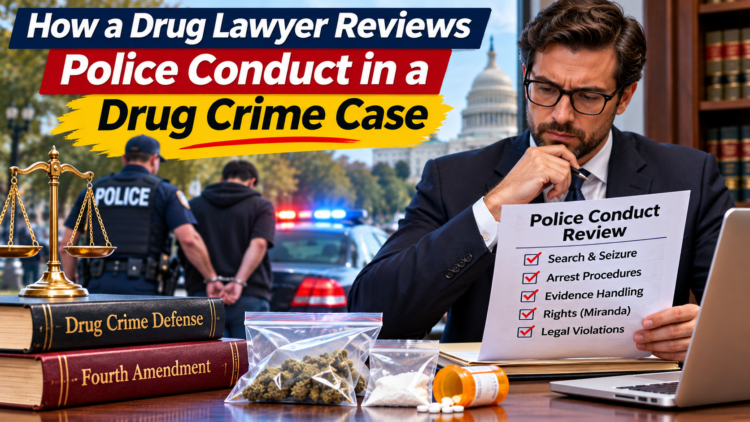
How a Drug Lawyer Reviews Police Conduct in a Drug Crime Case
If you’ve been arrested for drugs, you may have more questions than answers. You could question whether the cops were acting lawfully when they arrested you. Did the officers have probable cause to search your car or your home? Was evidence processed properly? These are important questions to ask in a drug criminal investigation. Look into the laws that officers must abide by when questioning alleged drug crimes. If cops go beyond certain boundaries, their conduct may damage the case. A drug lawyer will look at the police actions for faults and will make sure that your rights are protected. Why would technicalities matter when your freedom is at stake?
Why Is the Behavior of the Police Important in a Drug Case?
The police take a large part in investigating drug crime. It affects the evidence that prosecutors will utilize in court. Officers can pull over cars, interrogate suspects, confiscate drugs, and search homes. They must adhere to the law at every turn. One mistake in an investigation can spoil the prosecution’s case. An illegal search, for instance, gives the defense argument to contest substances seized. A drug lawyer does more than just arrest. The lawyer explores how the police obtained the evidence and whether or not they followed proper procedures.
Was the police search reasonable?
The Fourth Amendment protects you from unwarranted searches and seizures. In most cases, police must have a warrant or an exception to the law to search private property. A lawyer reviews the basis for search. This review may involve:
- If officers had a proper search warrant.
- Whether the warrant named the proper place.
- Whether the cops went beyond the scope of the warrant.
- Whether permission was voluntary.
- Whether the officers had probable cause to search the car.
Searches are not always warrantless. Some exceptions include vehicle searches and emergencies. But the police must adhere to the guidelines for each exception. A lawyer will evaluate the facts and argue that a search was not in compliance with these rules.
What Does a Drug Attorney Imagine About an Arrest?
There are legal requirements for arrests, too. The police must have legal grounds for holding someone. A drug lawyer evaluates what happened before, during, and after the arrest. The lawyer can determine whether cops have adequate information to support their actions. For example, the officers may have said they saw drugs in a traffic stop. The lawyer may look at dashcam evidence, body camera footage, and police reports. Upon review, they may be able to notice discrepancies between what the cops claimed happened and what actually happened. These facts could aid the defense in disputing the state’s account of events.
Did the Police Honor Your Right to Counsel During Their Questioning?
Police questioning could be for a drug activity probe. They may question if they have drugs, sold drugs, or dealt with persons. The Fifth Amendment provides protection from self-incrimination. Miranda warnings are often required for certain custodial interrogations. The lawyer reviews whether appropriate police cautions were given. The lawyer also makes sure that the person was aware of those rights and waived them. Statements obtained during interrogation may constitute critical evidence. If the police breached the law, the defense might then ask the court to throw out some statements. Never guess or make up replies when the cops ask you. Request a lawyer and advise you to exercise your right to remain silent.
Did the police handle the drugs properly?
Physical evidence is usually important in drug prosecutions. These may include seized drugs, cash, phones, scales, etc. Police must maintain good records when handling seized evidence. This is called a chain of custody. The log documents who gathered each item and when and where it was stored or transferred, as well as who tested it. Gaps in recordkeeping or mishandling may call the evidence into question. A drug lawyer may probe into:
- Police seizure documents and evidence logs.
- Results from crime lab tests.
- Drug weight and type of drug.
- Transfer logs and storage logs.
- Photos/videos taken at the time of arrest.
A lawyer will also want to know whether any lab testing was done correctly. Testing flaws might weaken the prosecution’s case. However, not all record errors will result in the exclusion of evidence. The question for the court is if the nature of the problem impacts reliability or admissibility of the evidence.
Police Misconduct: Can It Dismiss Your Drug Charges?
Police misbehavior can impact the outcome of a drug prosecution. Depending on the kind of infraction and of proof, the outcome may vary. Your lawyer can move to suppress evidence. This requests that the judge not allow particular evidence to be shown in court. For example, cops might discover drugs during an illegal search of a house. Prosecutors could lose good evidence if a court decides to exclude evidence. If evidence is eliminated, some cases may be tougher to prove. Without any evidence, charges may get dismissed, or the case is rethought about by prosecutors. Indeed, this does not mean police wrongdoing will ensure that the prosecutors will drop the charges. There may be other good evidence for the charges.
How Does the Platinum Criminal Defense Law Firm Make a Difference?
Drug charges can harm your job, your family, and your future. You want an experienced criminal defense attorney with courtroom skills. David Benowitz has a proven record of defending those charged with crimes at Platinum Criminal Defense. Mr. Benowitz works hard to provide excellent customer service at an affordable price. He is a Martindale-Hubbell AV rated attorney and has a 10.0 super lawyer AVVO rating. He also is a member of the National College of DUI Defense. Mr. Benowitz also serves as a faculty member of the Trial Advocacy Workshop at Harvard Law School. He has been a criminal defense lawyer and trial advocate. Experienced criminal defense attorney examining police reports, search records, and perhaps confiscated physical evidence. Getting a lawyer early will help you safeguard your rights and know what to do next.
Frequently Asked Questions and Answers
- What does a drug lawyer check for in police conduct?
Short answer: A drug lawyer reviews police conduct to ensure the legality of the probe.
Long answer: The lawyer examines arrests, searches, intercepts, interrogation, and the handling of evidence. If cops breached legal regulations, the defense can reject some evidence. This may weaken the case for the prosecution.
- Can a drug lawyer oppose an illegal search?
Short answer: Yes. Illegal search and seizure in violation of the Fourth Amendment that a lawyer can dispute in an arrest.
Long answer: The lawyer will take a position on whether the police have a proper search warrant or other legal basis to perform the search. If the search was illegal, the defense might enter a request to suppress the evidence. It’s up to the court to determine whether the evidence will be allowed.
- Will police questioning help my drug case?
Short answer: that it can. Anything you say to the police might be used against you in court.
Long answer: Police must follow rules when questioning someone in detention. A lawyer ensures police delivered Miranda warnings and respected your rights. Police can throw out comments if an officer abused his powers.
- What if police mis-handle drug evidence?
Short answer: Mishandling evidence can cause reasonable doubt about the prosecution’s case.
Long answer: Police need to retain records of handling seized drugs. Lost records or testing flaws can compromise the reliability of evidence. A lawyer may investigate these problems and pose the required legal challenges.
- When must you seek a drug defense attorney?
Short answer: You should hire a drug defense lawyer immediately after your arrest or investigation.
Long answer: Getting an attorney involved sooner rather than later will allow the attorney to investigate police behavior and to retrieve critical evidence. Your lawyer can also assist you with interrogation, defense strategies, and court dates.